how to find out what web ports my isp blocks
At that place'southward a good chance you've happened upon this article because an application you're trying to run is complaining nigh a "port" being blocked or you've read about how leaving certain "ports" open on your network can be a security problem.
Either style, past the stop of this piece you lot'll not just know what these ports everyone is going on about are, simply how to check your figurer to find open or airtight ports.

What Is a Network Port?
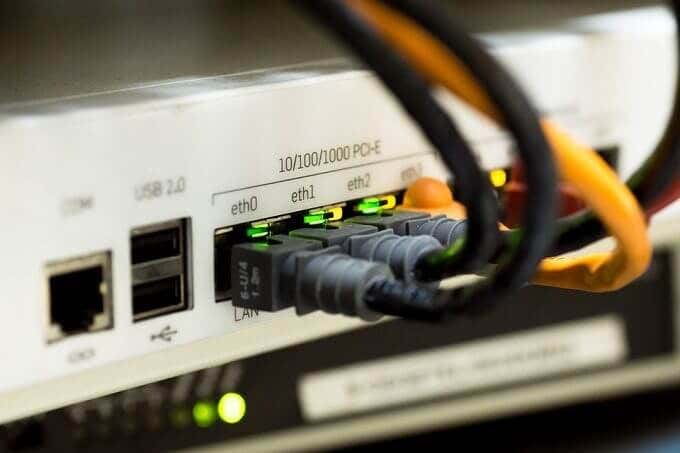
The first matter you lot should know is that the ports we're referring to hither are virtual. It has nothing to practice with the physical network hardware ports on your router, Tv, consoles or computers. Ports are simply a way for your network hardware and software to organize information traffic.
Think of reserved lanes on a road. The sidewalk is for pedestrians. There might be a defended bike lane. Carpool vehicles and buses have their own lanes too. Ports serve the same function. One port might be used for receiving emails, while another carries file transfer requests, or website traffic.
At that place are 2 common types of ports, which need a brief explanation before we motility on to checking which ports on your system are open and which aren't.
What Are TCP & UDP Ports?
The two common types of ports on modern networks are known equally TCP and UDP ports. That is Manual Control Protocol and User Datagram Protocol respectively. So these two port types employ dissimilar network protocols.
Which you can remember of as distinctive sets of rules for how bits of data should be sent and received. Both port types are built on the primal Internet Protocol (IP) that makes the cyberspace and home networks, well, piece of work. However, they are suitable for different applications.

The large difference is that when you send information over UDP, the sender doesn't showtime have to establish a connexion with the receiver before starting the conversation. It'southward a bit like sending a letter. You don't know if the other person received your message and y'all accept no guarantee that you'll get any feedback.
TCP, on the other mitt, is more similar making a telephone call. The receiver has to "pick up" the connection and at that place'southward a back-and-forth period of information until someone deliberately hangs up.
UDP messages are more often than not broadcast over a network to anyone who is listening on the specified UDP port. This makes it perfect for housekeeping type messages that relate to running the network itself. It'due south too perfect for voice-over-IP streaming, online video games and streaming broadcasts.

Why? These applications benefit from UDP's low latency and constant stream of information that doesn't have to exist perfect to be useful. A fiddling corruption in your Skype chat is far less important than low amounts of lag, subsequently all.
TCP is much more common than UDP and admittedly makes sure that all data is received free from errors. Only about everything that doesn't need the specific advantages of UDP, uses TCP instead.
Which Ports Are Normally Open up By Default?
There are a LOT of ports. A port number tin can be anything from 0 to 65535! That doesn't mean any application can just pick any port. There are established standards and ranges, which helps the states make sense of the noise.

Ports 0-1023 are associated with some of the most important and key network services. This makes sense, since the lower-numbered ports were assigned start. The SMTP protocol for email, for example, is exclusively used by port 25.
Ports 1024-49151 are known equally "registered ports" and are assigned to important common services such as OpenVPN on port 1194 or Microsoft SQL on ports 1433 and 1434.
The rest of the port numbers are known equally "dynamic" or "private" ports. These ports aren't reserved and anyone tin can use them on a network to support a particular service. The but problem crops up when 2 or more services on the same network are using the same port.
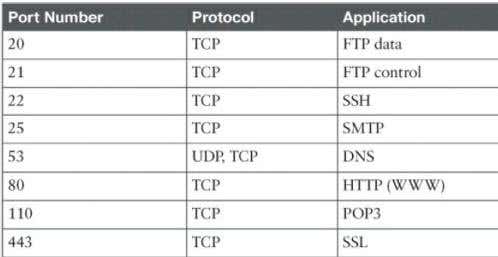
While it's incommunicable to list every single important port, these common ports are useful to know past center:
- 20 – FTP (File Transfer Protocol)
- 22 – Secure Crush (SSH)
- 25 – Simple Mail Transfer Protocol (SMTP)
- 53 – Domain Name System (DNS)
- fourscore – Hypertext Transfer Protocol (HTTP)
- 110 – Post Office Protocol (POP3)
- 143 – Internet Message Access Protocol (IMAP)
- 443 – HTTP Secure (HTTPS)
Since there are then many thousands of mutual port numbers, the easiest arroyo is to remember the ranges. Which volition tell you lot if a given port is reserved or not. Thank you to Google, you can also look up which services use a specific port in no time at all.
Find Open Ports In Windows

Now that we've got all the bones knowledge about TCP and UDP ports out of the fashion, it'due south fourth dimension to get down to the process of finding which ports are open and in use on your reckoner.
The good news is that Windows has a pretty useful command built into information technology that will show you what ports are currently being used on your computer past various applications and services.
- The first thing you want to practice is open up the First Menu and search for CMD.
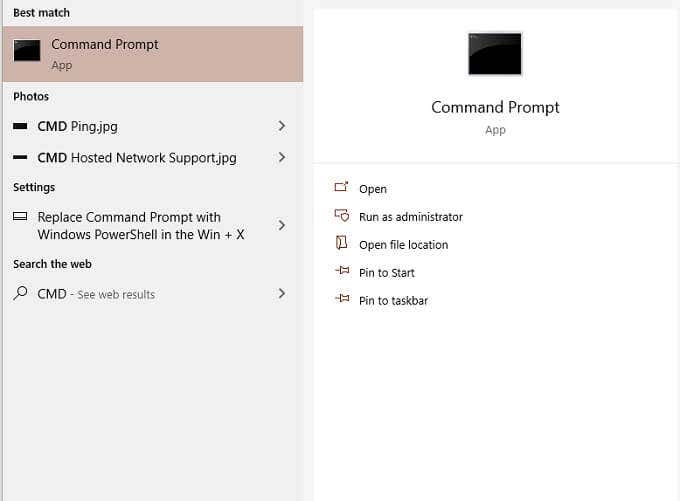
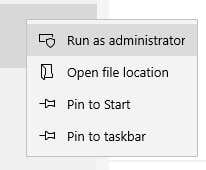
- Now, correct-click on CMD and Run as Administrator.
- With the Control Prompt open, blazon:
Netstat -ab
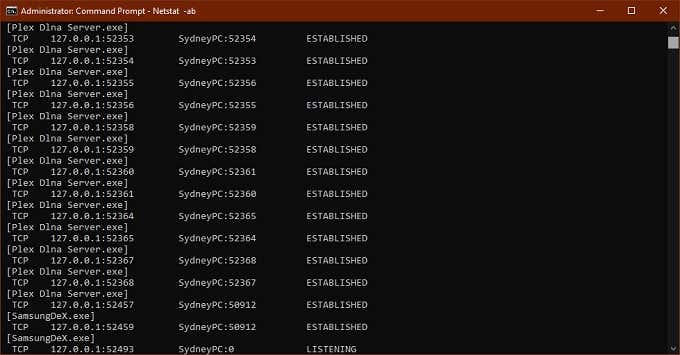
- Don't worry about a long list of info scrolling by faster than you tin read it. Y'all can simply use CTRL+C and CTRL+V to re-create and paste the information into Notepad or any other text editor.
- The information in brackets is the name of the program that's using the port. TCP or UDP refers to the protocol being used on that port. The number consists of an IP address and then the port number after the colon.
Scanning For Blocked Ports

That takes care of finding which ports are being used and by which application, only it doesn't tell the states which ports are being actively blocked past the Windows Firewall.
- Once once again, open the Start Menu and search for CMD.
- Right-click on CMD and Run as Ambassador.
- With the Command Prompt open, blazon:
netsh firewall testify country
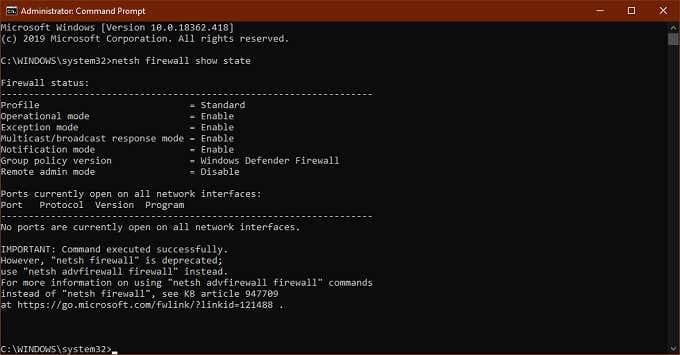
This is a brandish of blocked and open up ports equally per the configuration of your Windows Firewall.
You'll see a note about this command existence deprecated, but the new command doesn't testify usa the information we want. So for at present using the 'show country' command is notwithstanding the fastest and easiest way to get port information.
Simply considering the Windows Firewall isn't blocking a port, that doesn't hateful your router or ISP aren't. And then the concluding affair we want to practice is bank check if any external blocking is happening.
- Open the Start Menu and search for CMD.
- Now, right-click on CMD and Run as Administrator.
- With the Control Prompt open, type:
netstat -ano | findstr -i SYN_SENT
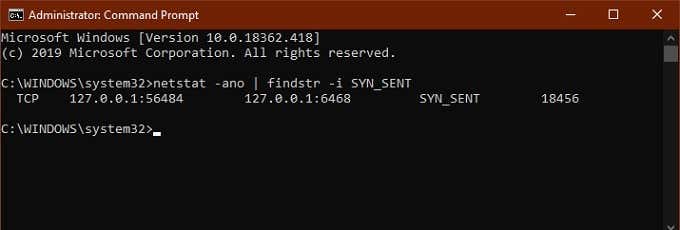
If you lot don't get whatsoever hits listed, so nothing is being blocked. If some ports are listed, it means they are beingness blocked. If a port non blocked by Windows shows up here, y'all may want to bank check your router or popular an electronic mail to your Internet service provider, if switching to a different port isn't an pick.
Useful Apps To Map Out Your Port Status
While the Control Prompt is a good quick and dirty tool, there are more than refined third-party applications that tin can help you get a picture of your port configuration. The two highlighted here are but popular examples.
SolarWinds Free Port Scanner
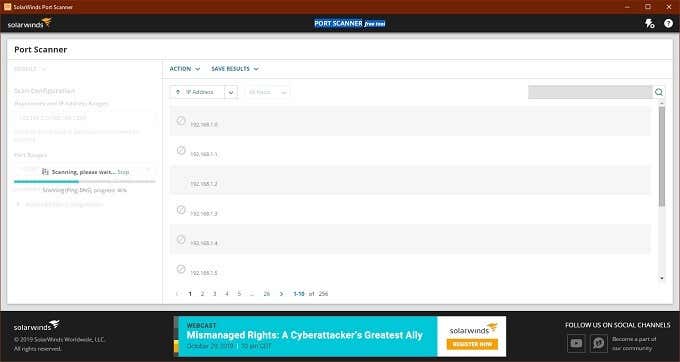
SolarWinds requires that you lot submit your name and details in order to download it, but it's up to yous whether y'all put your existent information into the form or not. We tried several gratuitous tools earlier settling on SolarWinds, simply it was the merely tool that both worked properly under Windows 10 and had an piece of cake interface.
It was too the only 1 non to trigger a faux positive virus flag. I of the big issues with port scanning software is that security companies tend to come across them as malware. And then almost users ignore whatever virus alarm that come up with such tools. That'south a problem considering you can't tell the deviation betwixt a false positive and a real virus in these apps.
SolarWinds might come with some strings attached, but information technology actually works as advertised and is easy to use.
CanYouSeeMe
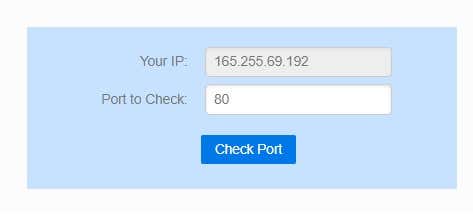
This is, equally you can probably tell, a website service rather than an application. It's a practiced commencement port of call to see if external data tin can go through your local port or not. It auto-detects your IP accost and all you have to practice is specify which port to test.
It will then tell you if the port is blocked or not and y'all'll and then take to figure out whether the blockage is on the computer, router or at the service provider level.
Decision
For nigh users, ports aren't something you demand to worry about. They are managed by your operating organization, applications and network hardware.
When things become wrong yet, it'due south expert to take the tool in hand that let yous detect open up ports to sniff out suspicious activity or figure out where exactly your precious data is hitting a brick wall.
Do not share my Personal Information.
pizarromintwoubity.blogspot.com
Source: https://helpdeskgeek.com/networking/determine-open-and-blocked-ports/
0 Response to "how to find out what web ports my isp blocks"
Post a Comment